



Reactive Oxygen Species (ROS)
Reactive oxygen species (ROS), such as superoxide anion (O2-), hydrogen peroxide (H2O2), and hydroxyl radical (HO•), consist of radical and non-radical oxygen species formed by the partial reduction of oxygen. Cellular ROS are generated endogenously during mitochondrial oxidative metabolism as well as in cellular response to xenobiotics, cytokines, and bacterial invasion.
ROS also activates MAPK pathways by the direct inhibition of MAPK phosphatases. Through PTEN, the PI3K pathway is subject to reversible redox regulation by ROS generated by growth factor stimulation. The activation of autophagy may be a cellular defense mechanism in response to ROS.
All Product Categories
-
Reactive Oxygen Species (ROS) Inhibitors
(1032)
View all products
-
Reactive Oxygen Species (ROS) Agonists
(37)
View all products
-
Reactive Oxygen Species (ROS) Antagonists
(2)
View all products
-
Reactive Oxygen Species (ROS) Activators
(491)
View all products
-
Reactive Oxygen Species (ROS) Modulators
(20)
View all products
-
Reactive Oxygen Species (ROS) MDM2 Inhibitor
(1)
View all products
-
Reactive Oxygen Species (ROS) Inducers
(595)
View all products
-
Reactive Oxygen Species (ROS) Controls
(5)
View all products
-
Reactive Oxygen Species (ROS) Substrates
(3)
View all products
-
Reactive Oxygen Species (ROS) Related Products (2712)
Related Products (2712)

-
Antibodies (8)
-
Anti-MRSA agent 42
 0 ImagesCat. No.: HY-180191Anti-MRSA agent 42 (Compound 6d) is an anti-methicillin-resistant Staphylococcus aureus (MRSA) agent. Anti-MRSA agent 42 shows strong inhibitory effects on MRSA standard strains and 11 clinical isolates with MIC values of 0.25-0.5 μg/mL. Anti-MRSA agent 42 has low hemolytic activity and minimal cytotoxicity toward mammalian cells. Anti-MRSA agent 42 can suppress biofilm formation, compromise the cell wall, and disrupt the cytoplasmic membrane, which are accompanied by membrane depolarization, enhanced permeability, and loss of membrane integrity. Anti-MRSA agent 42 can induce ROS production and bind to DNA grooves, interfering with nucleic acid function. Anti-MRSA agent 42 can be used for the research of MRSA infection.
-
TASIN-1 hydrochloride
 0 ImagesCat. No.: HY-116572CAS No.: 1678515-13-3TASIN-1 hydrochloride is a selective inhibitor of truncated APCTR (adenomatous polyposis coli gene) that exerts cytotoxic effects by inhibiting cholesterol biosynthesis. TASIN-1 hydrochloride specifically targets colorectal cancer (CRC) cells carrying APC truncated mutations, while having no significant toxicity to wild-type APC cells. TASIN-1 hydrochloride exerts cytotoxic effects by targeting Emopamil binding protein (EBP) to inhibit cholesterol biosynthesis, triggering endoplasmic reticulum (ER) stress, reactive oxygen species (ROS) generation, and JNK-mediated apoptosis, and inhibiting Akt survival signaling. TASIN-1 hydrochloride can be used to prevent and intervene in APC mutant colorectal cancer.
-
α-Thujone (Standard)
 0 ImagesCat. No.: HY-121618RCAS No.: 546-80-5α-Thujone (Standard) is the analytical standard of α-Thujone. This product is intended for research and analytical applications. α-Thujone is a monoterpene isolated from Thuja occidentalis essential oil with potent anti-tumor activities. α-Thujone is a reversible modulator of the GABA type A receptor and the IC50 for α-Thujone is 21 μM in suppressing the GABA-induced currents. α-Thujone induces ROS accumulation-dependent cytotoxicity, also induces cell apoptosis and autophagy. α-Thujone has antinociceptive, insecticidal, and anthelmintic activity, and easily penetrates the blood-brain barrier.
-
3-O-Methyltolcapone
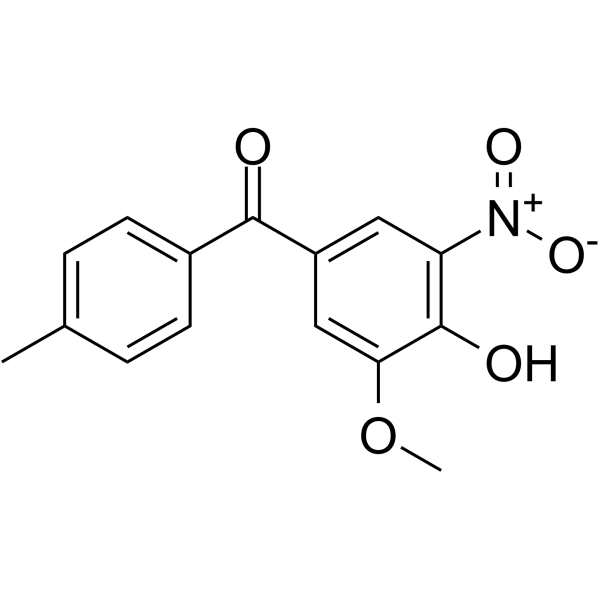 0 ImagesSynonyms: Ro 40-75913-O-Methyltolcapone (Ro 40-7591) is a metabolite of Tolcapone (HY-17406). Tolcapone (Ro 40-7592) is a selective, potent and orally active COMT inhibitor with an IC50of 773 nM. Tolcapone can inhibits α-syn and Aβ42 oligomerization and fibrillogenesis. Tolcapone can cause oxidative stress and induce cancer cells apoptosis and ROS production. Tolcapone can be used for the researches of cancer and neurological disease, such as Parkinson disease and neuroblastoma.
-
2-Methoxyestradiol (Standard)
 0 Images2-Methoxyestradiol (Standard) is the analytical standard of 2-Methoxyestradiol. This product is intended for research and analytical applications. 2-Methoxyestradiol (2-ME2), an orally active endogenous metabolite of 17β-estradiol (E2), is an apoptosis inducer and an angiogenesis inhibitor with potent antineoplastic activity. 2-Methoxyestradiol also destablize microtubules. 2-Methoxyestradio, also a potent superoxide dismutase (SOD) inhibitor and a ROS-generating agent, induces autophagy in the transformed cell line HEK293 and the cancer cell lines U87 and HeLa.
-
Ophthalmic acid (Standard)
 0 ImagesCat. No.: HY-126752RCAS No.: 495-27-2Ophthalmic acid (Standard) is the analytical standard of Ophthalmic acid. This product is intended for research and analytical applications. Ophthalmic acid, an analogue of GSH, is a marker of oxidative stress and hepatic GSH consumption. Ophthalmic acid is an inhibitor of Glyoxalase I reaction.
-
Antiparasitic agent-44
 0 ImagesCat. No.: HY-184409Antiparasitic agent-44 is an orally active Antiparasitic agent. Antiparasitic agent-44 reduces parasitemia levels, ROS, reactive nitrogen, lipid oxidation, protein oxidation, inflammatory responses and microstructural damage in Trypanosoma cruzi-infected mice. Antiparasitic agent-44 can be used for the research of Chagas disease.
-
C12-rrw-NH2
 0 ImagesCat. No.: HY-170991C12-rrw-NH2 (Compound Lip7) is an antibacterial agent against gram-positive bacteria, especially against Methicillin (HY-121544)-resistant Staphylococcus aureus (MRSA). C12-rrw-NH2 induces bacterial death via depolarizing the bacterial cytoplasmic membrane, disrupting the integrity of the bacterial membrane, leading to leakage of nucleic acid and protein and promoting the generation of Reactive Oxygen Species. C12-rrw-NH2 is potential to be used for research of developing high-stability antimicrobial peptides.
-
Neosolaniol (Standard)
 0 ImagesCat. No.: HY-N6799RCAS No.: 36519-25-2Neosolaniol (Standard) is the analytical standard of Neosolaniol (HY-N6799). This product is intended for research and analytical applications. Neosolaniol is an orally active type A trichothecene mycotoxin, and it is a metabolite of T-2 Toxin (HY-N6792) in human cancer cells and renal epithelial cells. Neosolaniol targets Bax, Bcl-2, caspase 3, caspase 8, and cytochrome c, thereby inducing apoptosis, emesis and anorexia. Neosolaniol reduces intracellular ATP levels, elevates ROS levels, decreases mitochondrial membrane potential, induces mitochondrial damage, and exerts toxicity on Leydig cells. Neosolaniol downregulates the expression of intestinal tight junction proteins in broilers and increases the load of Salmonella enteritidis in the cecum of broilers. Neosolaniol can be used in research related to anorexia, lymphoma, Fusarium melonis rot, and Salmonella infection.
-
TMB (Standard)
 0 ImagesSynonyms: BM blue (Standard); Sure Blue TMB (Standard)TMB (Standard) is the analytical standard of TMB. This product is intended for research and analytical applications. TMB is a non-toxic, non-mutagenic, colorless dye that is also used as a chromogenic agent in enzyme detection systems based on horseradish peroxidase (HRP). TMB can function as a photoacoustic probe for reactive oxygen and nitrogen species (ROS/RNS), reacting with hypochlorite, hydrogen peroxide, singlet oxygen, and nitrogen dioxide to produce blue oxidation products. TMB can detect the singlet oxygen produced by the outer membrane of Escherichia coli ATCC 25922.
-
Hydralazine hydrochloride (Standard)
 0 ImagesHydralazine (hydrochloride) (Standard) is the analytical standard of Hydralazine (hydrochloride). This product is intended for research and analytical applications. Hydralazine hydrochloride is an orally active, blood-brain barrier-permeable DNA methyltransferase inhibitor with vasodilatory, arterial smooth muscle relaxant and hypotensive activities. Hydralazine hydrochloride reactivates silenced tumor suppressor genes via mediating DNA demethylation, while exerting neuroprotective and anti-inflammatory properties. Hydralazine hydrochloride inhibits NOS-2 (iNOS) and COX-2, and reduces the production of NO and PGEE2; meanwhile, Hydralazine hydrochloride scavenges reactive oxygen species and inhibits macrophage activation. Hydralazine hydrochloride alleviates motor dysfunction, neuropathic inflammatory pain, and formalin-induced somatic and emotional pain responses. In addition, Hydralazine hydrochloride directly induces DNA strand breaks and sister chromatid exchange, exhibiting certain mutagenic characteristics. Hydralazine hydrochloride has been widely used in studies on hypertension, various cancers (such as cervical cancer, leukemia), spinal cord injury and the mechanisms of inflammatory pain.
-
Antifungal agent 134
 0 ImagesCat. No.: HY-174388CAS No.: 3080992-04-4Antifungal agent 134 (Compound B13) is an antifungal agent with EC50s of 3.24, 1.89, 1.70, 0.36, 4.27, and 1.50 μg/mL for Botrytis cinerea, Alternaria solani, Fusarium graminearum, Rhizoctonia solani, Colletotrichum orbiculare, and Alternaria alternata, respectively. Antifungal agent 134 can disrupt the cell membrane and mitochondria of the hyphae, leading to significant ROS accumulation. Antifungal agent 134 also has significant herbicidal activities against field weeds, such as Amaranthus retroflexus L and Abutilon theophrasti Medicus. Antifungal agent 134 can be used for crop diseases and field weeds research.
-
Dimethachlor (Standard)
 0 ImagesCat. No.: HY-121423RCAS No.: 50563-36-5Dimethachlor (Standard) is the analytical standard of Dimethachlor. This product is intended for research and analytical applications. Dimethachlor, a synthetic herbicide, inhibits the undesirable growth of weeds via the suppression of very long-chain fatty acid synthesis. Dimethachlor disrupts normal developmental processes via the induction of apoptosis and ROS production.
-
Calycosin-7-O-β-D-glucoside (Standard)
 0 ImagesCat. No.: HY-N0520RCAS No.: 20633-67-4Synonyms: Calycosin-7-glucoside (Standard)Calycosin-7-O-β-D-glucoside (Standard) is the analytical standard of Calycosin-7-O-β-D-glucoside. This product is intended for research and analytical applications. Calycosin-7-O-β-D-glucoside is an isoflavone isolated from Astragali Radix. Calycosin-7-O-β-D-glucoside has variety of biological activities, such as neuroprotective, cardioprotection, anti-inflammation, and antioxidative stress effects.
-
Deoxynyboquinone (Standard)
 0 ImagesCat. No.: HY-108992RCAS No.: 96748-86-6Deoxynyboquinone (Standard) is the analytical standard of Deoxynyboquinone (HY-108992). This product is intended for research and analytical applications. Deoxynyboquinone, an excellent NQO1 substrate, is a potent antineoplastic agent. Deoxynyboquinone induces apoptosis in cancer cell lines. Deoxynyboquinone Kills cancer cells through oxidative stress and reactive oxygen species (ROS) formation.
-
CD1530 (Standard)
 0 ImagesCat. No.: HY-108527RCAS No.: 107430-66-0CD1530 (Standard) is the analytical standard of CD1530 (HY-108527). This product is intended for research and analytical applications. CD1530 is an orally active, selective RARγ agonist and antibacterial agent. CD1530 reduces Smad1/5/8 phosphorylation and overall Smad levels. CD1530 reduces β-catenin, MMP9 protein, and ROS levels. CD1530 exhibits activities such as inhibiting heterotopic ossification, promoting Achilles tendon healing, and inhibiting muscle fatty infiltration. CD1530 can be used in the research of orthopedic diseases (such as heterotopic ossification, Achilles tendon injury), muscle diseases (such as muscle fatty infiltration-related diseases).
-
D-Ribose-L-cysteine
 0 ImagesD-Ribose-L-cysteine is an orally active cysteine analog. D-Ribose-L-cysteine improves cellular antioxidant capacity by enhancing intracellular glutathione (GSH) biosynthesis. In addition, D-Ribose-L-cysteine has a memory-enhancing effect and can reverse Scopolamine (HY-N0296)-induced memory impairment by inhibiting oxidative stress and acetylcholinesterase (AChE) activity. D-Ribose-L-cysteine can be used in the study of neurodegenerative and cardiovascular diseases.
-
Isorabaichromone
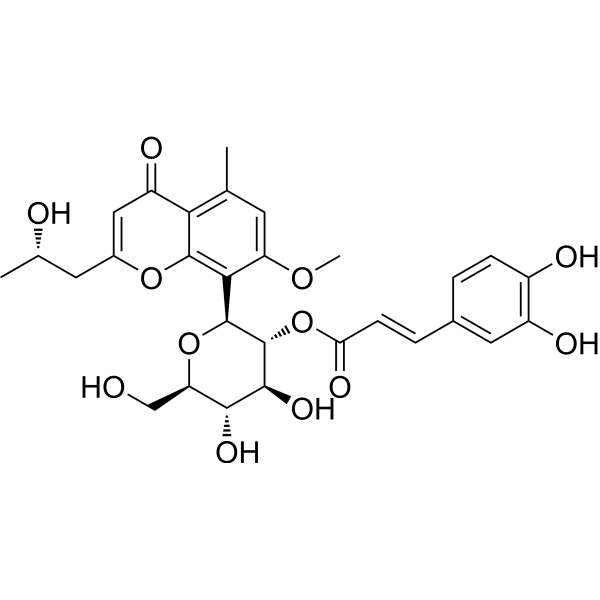 0 ImagesCat. No.: HY-N11895CAS No.: 194669-79-9Isorabaichromone is a potent antioxidant agent. Isorabaichromone shows a potent antioxidative activity and exhibits DPPH radical and superoxide anion scavenging activities.
-
L 012 sodium salt (Standard)
 0 ImagesCat. No.: HY-108537RCAS No.: 143556-24-5L 012 sodium salt (Standard) is the analytical standard of L 012 (sodium salt) (HY-108537). This product is intended for research and analytical applications. L 012 sodium salt is a luminal-based chemiluminescent probe. L 012 sodium salt can detect NADPH oxidase (Nox)-derived superoxide and nitrogen species (reactive oxygen species (ROS) and reactive nitrogen species (RNS)).




